

 Al Ahsa
Start Here
All Treatments
IVF & Fertility
Reproductive Genetics
Fertility Preservation
Gynecology & Antenatal Care
Andrology & Male Infertility
Not Sure Where To Start?
In Vitro Fertilization (IVF) and Intracytoplasmic Sperm Injection (ICSI)
Book an AppointmentIVF & Fertility Care
Advanced treatment for couples facing infertility
IVF and ICSI are advanced fertility treatments designed to help couples experiencing infertility. In IVF, eggs are retrieved from the ovaries and fertilized with sperm in the laboratory. In ICSI, the best single sperm is injected directly into each mature egg to support fertilization, particularly in cases of male-factor infertility.
Who may benefit from IVF or ICSI?
IVF or ICSI may be recommended in cases such as:
- Male-factor infertility or abnormal semen analysis
- Unexplained infertility
- Previous unsuccessful fertility treatments
- Ovulation disorders
- Blocked or damaged fallopian tubes
- Endometriosis
- Inherited diseases and genetic disorders
i
Important note: Every fertility journey is different. At Bnoon, each treatment plan is tailored to the patient's medical history, test results, and individual needs.
Need Help?
Our fertility specialist team is here to support you anytime. Call us directly.
9200 100 22
Your IVF Journey
What to Expect
- 01
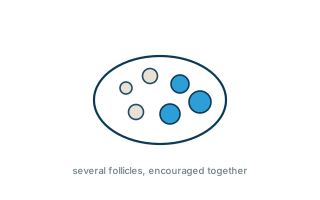
Ovarian Stimulation
Hormonal ovulation induction medications are used for the wife to stimulate the ovaries to produce reasonable number of mature eggs. This stage is monitored through ultrasound scans and blood tests, and takes around 10 - 14 days.
- Duration:
- 10 – 14 days
- Monitoring:
- Ultrasound
- Anaesthetic:
- None
- 02
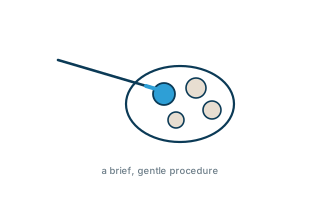
Egg Retrieval
When the eggs are ready, they are collected from the wife's ovaries during a minor procedure performed under sedation.
- Duration:
- About 20 min
- Setting:
- Day procedure
- Anaesthetic:
- Light sedation
- 03
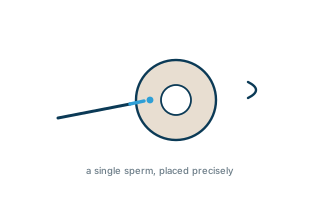
Fertilization
In the laboratory, the eggs are fertilized either through conventional IVF or by ICSI, where a single sperm collected from the husband is injected directly into the egg.
- Duration:
- Same day
- Method:
- IVF or ICSI
- Setting:
- Laboratory
- 04
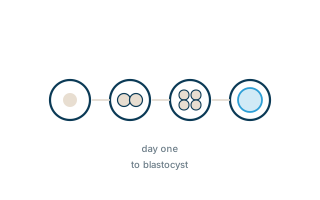
Embryo Culturing
If fertilization occurs, the embryos are monitored in the laboratory for several days and the couple are updated of the division of embryos on daily basis.
- Duration:
- 3 – 5 days
- Updates:
- Daily
- Setting:
- Incubator
- 05
Embryo Transfer
One or more embryos are then transferred into the uterus in the same cycle or could be frozen for future cycles after discussion with the couple.
- Duration:
- About 15 min
- Anaesthetic:
- None
- Option:
- Freeze for later
- 06
Pregnancy Test
A blood pregnancy test is usually done around 10-14 days after embryo transfer, depending on the treatment plan and day of embryo transfer.
- Timing:
- 10 – 14 days after
- Test:
- Blood test
- Result:
- Same day
Ready to Speak to One of Our Fertility Experts?
Book a call-back and a patient coordinator will respond within 48 hours.
Expert care. Trusted hands.
Our Physicians
Meet Bnoon's experienced fertility and women's health specialists.
Al Ahsa Riyadh
Dr. Abdalaziz Al-Shahrani
Group Medical Director Consultant, Obstetrics, Gynecology, Reproductive Endocrinology, Infertility (IVF) & Minimally Invasive Surgery
Request an Appointment Jeddah
Prof. Fawaz Edris
Executive Director, Bnoon - Jeddah Consultant, Obstetrics, Gynecology, Reproductive Endocrinology, Infertility (IVF), Minimally Invasive Surgery & Maternal Fetal Medicine
Request an AppointmentCompassionate care. Advanced results.
Ready to take the first step
toward parenthood?
Book a consultation with our fertility team and we'll build a plan around your history, your results, and your timeline.
Knowledge that supports you
Related Blogs
Stay informed with the latest insights from our fertility experts.


